
Table of Contents
- How to Tell If Your Windshield Needs Repair or Replacement
- Repair vs Replacement Decision Table: A Side-by-Side Comparison
- Windshield Crack Repair Size Limit: What Can Actually Be Fixed
- Windshield Crack in Driver’s Line of Sight: Why Location Changes the Answer
- Spreading Cracks, Clustered Chips, and Edge Damage
- How Temperature, Moisture, Dirt, and Time Affect Damage
- Windshield Replacement Cost and Windshield Repair or Replacement Insurance
- ADAS Cameras, Sensors, and Recalibration After Replacement
- Frequently Asked Questions
Last Updated: October 7, 2026
How to Tell If Your Windshield Needs Repair or Replacement
Most windshield damage can be repaired, but size, location, and spread push a chip or crack into replacement territory. This guide from Area Wide Auto Glass walks through the thresholds we use when assessing damage.
The short version: chips smaller than a quarter and cracks under a few inches, away from the driver’s view and the edges, are usually repairable. Anything larger, spreading, or in the driver’s line of sight typically calls for replacement.
The stakes go beyond appearance. A windshield is a structural component that supports the roof in a rollover and gives airbags a surface to push against. NHTSA guidance on vehicle safety systems treats the windshield as part of the occupant protection system, which is why we never recommend a repair that compromises glass strength.
Repair vs Replacement Decision Table: A Side-by-Side Comparison
Use this table as a first-pass filter. If your damage lands in the “Replace” column on any row, replacement is usually the right call.
| Factor | Repair | Replace |
|---|---|---|
| Chip size | Smaller than a quarter | Larger than a quarter |
| Crack length | Under 3-4 inches | Longer than a credit card or dollar bill |
| Location | Outside driver’s view | In the driver’s line of sight |
| Edge damage | Not on the edge | Within 2 inches of the edge |
| Number of chips | One or two isolated chips | Three or more clustered chips |
| Spreading | Stable for weeks | Growing day to day |
| Depth | Surface divot | Through both glass layers |
These factors stack. A quarter-sized chip near the edge is a replacement; the same chip dead center and low on the glass is a straightforward repair. Location and spread count as heavily as size.
Windshield Crack Repair Size Limit: What Can Actually Be Fixed
The practical windshield crack repair size limit is roughly 3 to 4 inches for a single crack, or a chip no larger than a quarter, provided the damage sits away from the edges and the driver’s view.
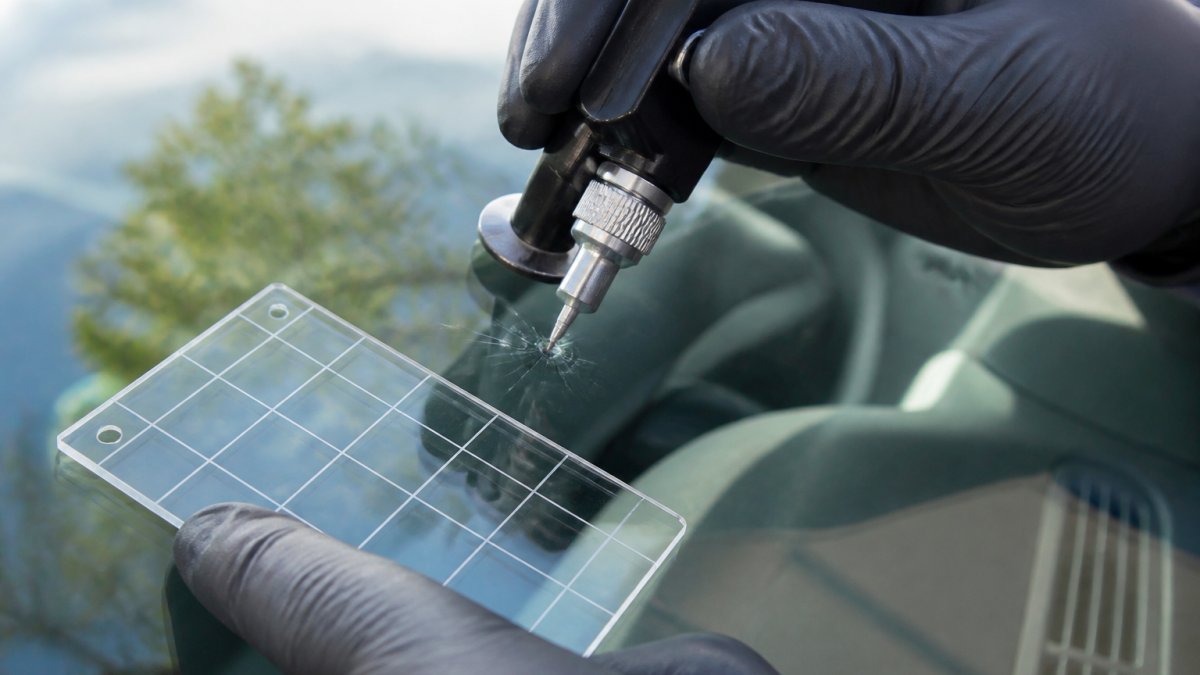
That limit is not arbitrary. A windshield is two layers of glass bonded to a plastic interlayer.
Repair works by injecting a clear epoxy resin into the damaged area and curing it under pressure. The resin fills the void, bonds the glass layers, and stops the crack from traveling.
Chip and Crack Size Thresholds: Credit Card, Dollar Bill, and Coin Tests
You can size damage with items already in your car.
- Quarter test: A chip smaller than a quarter is usually repairable. Larger than a quarter, expect replacement.
- Credit card test: Lay a card across the crack. If the crack runs longer than the card, replacement is the safer bet.
- Dollar bill test: A crack shorter than a dollar bill’s long edge is often still repairable if it is outside the driver’s view.
- Coin test for depth: If a coin edge catches in a deep divot, the damage has gone past the surface layer.
What Determines Whether a Repair Will Hold
Size is only one input. Three others decide whether resin will last:
- Damage type. A bullseye or star break with clean edges holds resin well. A crack with contaminated edges, a “flaking” pit, or a long leg that reaches the inner layer does not.
- Contamination. If dirt, water, or old resin has already entered the break, the new resin cannot bond cleanly. This is why a chip repaired once and failed is rarely worth repairing again.
- Stress state. A crack that is actively growing is under stress the resin cannot relieve. Repairing it just delays the inevitable.
What a Repair Actually Looks Like Afterward
Set expectations before you approve a repair. A successful repair leaves a small, faint blemish: nearly invisible from the driver’s seat on a clean bullseye, but a thin line or slight distortion on a longer crack or multi-leg star break. That is normal, not a failed repair. The goal is to stop the damage and restore strength, not make the glass look new, if cosmetic perfection matters, replacement is the only path to a flawless pane.
Check damage in shade, not direct sun. Heat makes glass expand and can hide the true length of a crack. A crack that measures short at noon may read longer in the cool of the morning.
A repair is a structural fix, not a cosmetic one. If the damage is small, clean, and outside your view, resin will hold. If it is large, contaminated, or already moving, replacement is the honest answer.
Windshield Crack in Driver’s Line of Sight: Why Location Changes the Answer
A windshield crack in the driver’s line of sight should be replaced, even when it is small. The driver’s view is the zone directly ahead of the steering wheel, roughly the width of the steering column and extending to the roofline.
Why the strict rule? A repair leaves a residual mark. In the driver’s primary view, that mark sits exactly where you need clear vision. It can scatter oncoming headlights, blur lane markings, and pull your focus at the worst moment.
Outside that zone, the same size chip is often a clean repair, the passenger side, lower corners, and far edges give technicians room to work without affecting your sightline.
If damage sits in your view and you keep driving, the risk compounds. Distorted vision is a safety problem, and many state inspection programs check for cracks in the driver’s field of view. state vehicle inspection requirements vary, so confirm what your state requires before assuming a repair will pass.
Spreading Cracks, Clustered Chips, and Edge Damage
Damage that is already moving, clustered, or touching the edge is replacement territory. All three share one trait: the glass has lost integrity across a wider area than the visible damage suggests.
Spreading cracks. A crack that grows between drives is under stress. Temperature swings and body flex keep opening it, and resin cannot hold a crack that is actively traveling.
Clustered chips. Three or more chips close together weaken the same zone. Repairing each one individually leaves a patchwork of resin that may not hold.
Edge damage. Cracks within about 2 inches of the windshield edge are almost always replacements. The edge is where the glass bonds to the frame, and that bond carries structural load.
How Temperature, Moisture, Dirt, and Time Affect Damage
Time is the enemy of every chip and crack. The longer damage sits, the more likely it turns a repair into a replacement.
Temperature swings. Glass expands in heat and contracts in cold. A parked car in summer sun can see surface temperatures well above ambient, then cool rapidly overnight.
Moisture. Water seeps into an open chip. Below freezing, it expands and pries the crack apart from inside.
Dirt and dust. Road grit, pollen, and dust settle into the break and coat the fracture faces, so resin cannot bond cleanly and the repair is weaker or impossible.
Time. Every day a chip sits, all three factors above compound. A fresh chip is a repair. A chip that has weathered a season is often a replacement.
A Simple Prevention Protocol
If you cannot get to a shop immediately, do this:
- Clean the area gently. Rinse with water, do not scrub. Skip glass cleaner; ammonia and alcohol can wick into the break and interfere with resin later.
- Cover the chip with clear tape. A piece of ordinary packing tape or a dedicated chip cover keeps water and grit out. Replace the tape if it lifts.
- Keep the car out of direct sun and away from freeze-thaw cycles when you can. A garage or covered parking slows the damage.
- Do not run the defroster on high directly at the chip. Rapid local heating is one of the fastest ways to turn a chip into a crack.
- Avoid slamming doors and potholes. Body flex and sharp jolts propagate cracks.
How Long Do You Actually Have?
There is no universal clock, but a common pattern is:
- Fresh chip, clean, covered, mild weather: days to weeks before repairability is at risk.
- Chip exposed to rain and sun: repairability drops within days.
- Chip through a freeze-thaw cycle: often a replacement by the time it is inspected.
- Crack visibly growing between drives: treat as urgent; it can reach the edge or the driver’s view within a single trip.
The takeaway: cover a chip with clear tape and get it assessed quickly.
Do not use superglue, nail polish, or DIY resin kits on a chip you plan to have professionally repaired. These products contaminate the break and can make a repairable chip unrecoverable. Clear tape is the only safe field fix.
Windshield Replacement Cost and Windshield Repair or Replacement Insurance
Windshield replacement cost depends on your vehicle, the glass type, and whether the windshield carries cameras and sensors. We don’t publish flat prices because a basic sedan windshield and a sensor-equipped SUV windshield are very different jobs. For a current quote, contact us directly.
As a general market reference, the Independent Glass Association’s repair vs replacement comparison reports repair ranges of roughly $70 to $150 for a single chip or crack, and replacement ranges starting around $200 and running into the thousands for complex, sensor-laden windshields. Treat those as broad industry figures, not quotes for your car.
Windshield Repair or Replacement Insurance: Deductibles and Out-of-Pocket
Many comprehensive auto policies cover windshield repair with no deductible, and some waive it for repair specifically to encourage drivers to fix damage early. Replacement usually falls under your comprehensive deductible, so your out-of-pocket cost depends on that number.
Two questions decide your cost:
- Does your policy waive the deductible for repair? If yes, a repairable chip may cost you nothing.
- What is your comprehensive deductible, and is it lower than paying cash?
Area Wide Auto Glass bills major insurance companies directly, which cuts the paperwork and the upfront cost on your end. If you manage a fleet, we can coordinate claims across multiple vehicles so your drivers stay on the road.
ADAS Cameras, Sensors, and Recalibration After Replacement
Modern windshields hold cameras and sensors for lane-keeping, automatic braking, and adaptive cruise control. When those systems sit behind the glass, a windshield replacement is not finished until the cameras are recalibrated.
Recalibration aims the cameras back at the road so the safety systems read the lane correctly. Skip it, and features like lane departure warning can drift or fail. Many automakers require recalibration after any windshield replacement on an ADAS-equipped vehicle.
This is where technician training matters. Our certified technicians are trained in ADAS calibration, and we handle recalibration as part of the replacement rather than sending you elsewhere.
Skipping recalibration on a camera-equipped windshield can leave lane-keeping and automatic braking misaligned. The systems may still appear to work while reading the road incorrectly, which is worse than an obvious failure.
Windshield damage rarely waits for a convenient moment, and a small chip can turn into a full replacement faster than most drivers expect.
Frequently Asked Questions
How do I know if my windshield needs repair or replacement?
The deciding factors are damage size, location, and type. Chips smaller than a quarter and cracks under about six inches are often repairable, especially outside the driver’s view. Damage in the driver’s line of sight, cracks longer than a dollar bill, edge damage, or clustered chips usually call for windshield replacement. A professional inspection confirms the right call.
What size windshield crack can be repaired?
Cracks up to roughly six inches are often treated as repairable when they are not in the driver’s line of sight. A common rule of thumb is that a crack longer than a dollar bill needs replacement. Windshield crack repair size limit also depends on depth, location, and whether the crack has started to spread, so an in-person assessment matters.
Can a crack in a windshield be repaired if it is in the driver’s line of sight?
Damage in the driver’s line of sight is generally a replacement trigger, even when the chip or crack is small. The repair can leave a slight residual mark that distorts vision, and any obstruction in the primary viewing area can affect driving safety. A windshield crack in driver’s line of sight is best evaluated by a certified technician before deciding.
Will insurance go up if I replace a windshield?
In most cases, a windshield claim is filed under comprehensive coverage and does not raise your premium the way an at-fault accident claim can. Windshield repair or replacement insurance often waives the deductible for repairs, while replacements may require you to pay your deductible. Check your policy details and ask about direct billing to minimize out-of-pocket costs.

